EU Commits £143 Million to Malawi Development Agenda
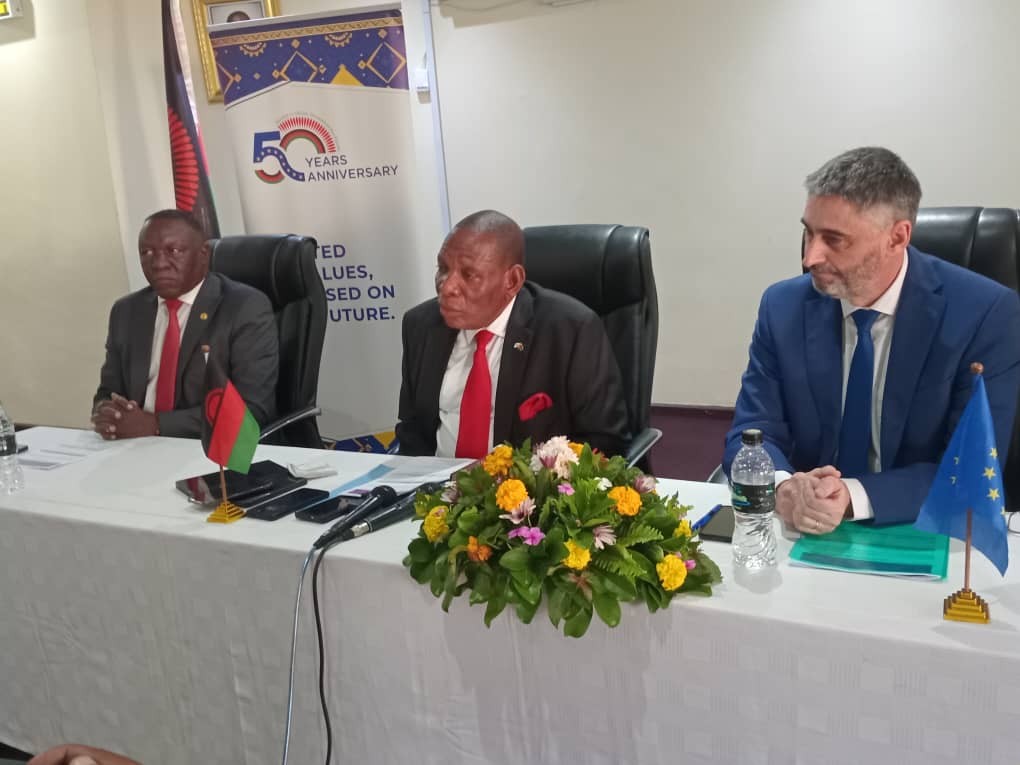
Minister of Finance, Economic Planning and Decentralisation Joseph Mathyola Mwanamvekha has hailed the European Union (EU) for committing £143 million, approximately K287 billion, towards Malawi’s development programmes.
Speaking during the launch of the EU’s 2026 Annual Action Plan (AAP), Mwanamvekha said the support demonstrated the EU’s continued confidence in Malawi and its government, particularly at a time of growing global political and economic uncertainty.
He said the EU had continued to support critical sectors of the economy, including agriculture, energy and human development.
Under the 2026 package, £35 million has been allocated to agriculture, £40 million to the energy sector and £68 million to youth empowerment through education and technical training.
Mwanamvekha said the agricultural investment would help strengthen productivity and value chains, while support to the energy sector would contribute to economic growth by addressing challenges in electricity generation, transmission and distribution.
He assured the EU that the funds would be managed responsibly and channelled towards their intended programmes.
The minister also disclosed that the EU had provided an additional £13 million in budget support, which had been transferred directly into Government Account Number One to finance specific government programmes.
He said the continued support was a clear indication that development partners still had confidence in Malawi and expressed optimism that more assistance from other partners would follow.
Meanwhile, EU Ambassador to Malawi Daniel Aristi said the 2026 Annual Action Plan forms part of the bloc’s wider development cooperation programme in Malawi, with an overall envelope of £500 million structured around three major pillars.
Under agriculture, the EU will support value chains for crops such as rice, coffee and soybeans, while strengthening links between farmers and markets through skills development, training, irrigation and improved market access.
Aristi said the EU would also invest in the energy sector, particularly electricity generation, transmission and distribution.
The third pillar, he said, would focus on human development, including secondary education, school feeding programmes and social protection.
According to Aristi, the interventions are aimed at increasing access to quality education and essential services for Malawian children and vulnerable communities.
He stressed that EU development assistance would continue to be guided by accountability and transparency to ensure that resources reach the intended programmes and beneficiaries.
The latest support comes as Malawi continues to mobilise development financing and investment to strengthen key sectors of the economy, expand opportunities for young people and improve the delivery of public services.