
China’s Ninth Farmers’ Harvest Festival Highlights Agricultural Progress and Malawi Cooperation
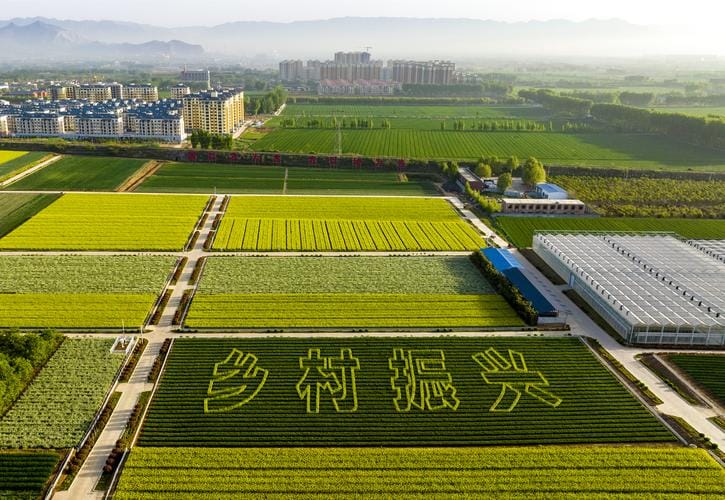
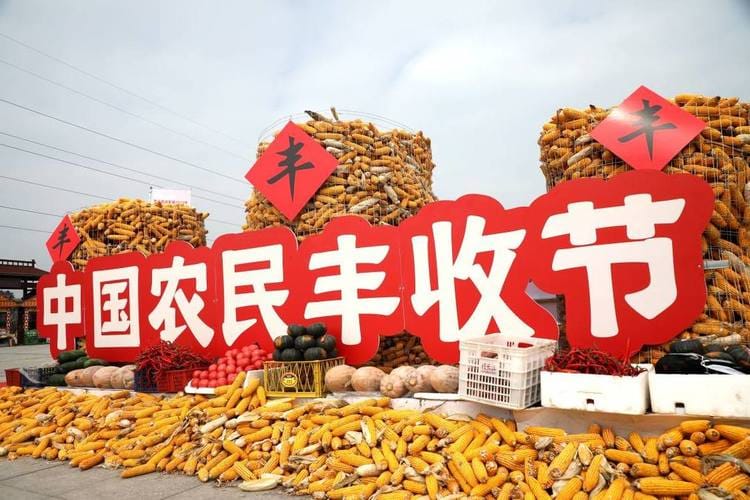
China marked its ninth Chinese Farmers’ Harvest Festival on September 23, celebrating agricultural achievements amid record grain production and growing agricultural cooperation with Malawi.
Established in 2018 and observed annually around the Autumn Equinox, the festival is dedicated to celebrating farmers and agricultural workers and recognising their contribution to food security and rural development.
This year’s celebrations came as China recorded a historic milestone, with summer grain production exceeding 300 billion jin (150 million tonnes) for the first time. Early rice production has also remained above 56 billion jin (28 million tonnes) for six consecutive years.
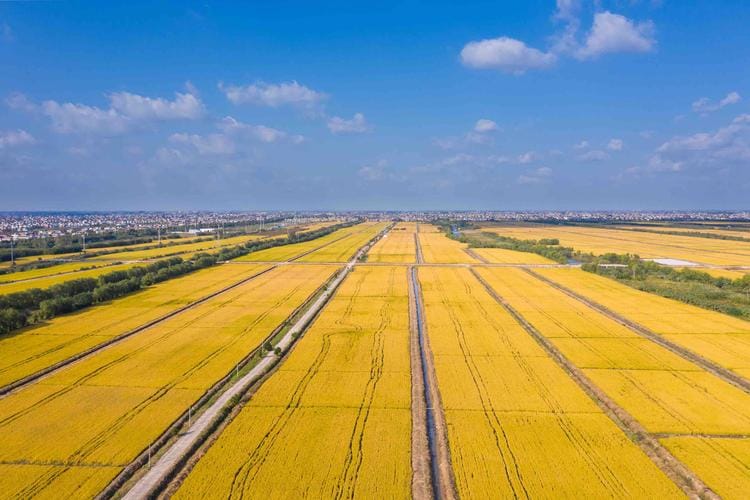
Behind these figures is China’s long-term strategy of increasing agricultural productivity through technology and innovation rather than expanding farmland.
China currently feeds nearly 20 percent of the world’s population using less than nine percent of global arable land. Agricultural science and technology account for more than 64 percent of growth in agricultural output, while the overall mechanisation rate for ploughing, planting and harvesting has reached 76.7 percent.
By the end of 2025, China had developed more than one billion mu (66.7 million hectares) of high-standard farmland, featuring improved irrigation, land levelling and infrastructure designed to support modern mechanised farming.
Under its 15th Five-Year Plan (2026–2030), China has set a target of reaching comprehensive grain production capacity of 1.45 trillion jin (725 million tonnes) by 2030.
China-Africa Agricultural Technology Reaches Malawian Villages
Elements of China’s agricultural development model are increasingly being applied in Malawi through the China-Africa Science and Technology Backyard project, operated by China Agricultural University since 2019.
Four such “backyards” are currently operating in Malawi. These are small farm-based centres where Chinese agricultural experts and students work alongside local farmers to test and promote practical farming technologies.
In Chipokolo Village in Kasungu District, maize yields have reportedly increased from about two tonnes per hectare to around eight tonnes per hectare since the project began.
The initiative uses a “1+1+1” training model, involving one year of theoretical study in China, one year of practical fieldwork in African villages and a final year in China to complete research.
More than 130 agricultural students from 13 African countries have been trained under the programme.
Among the techniques introduced to Malawian farmers are hybrid seed planting using precision seeders, production of organic fertiliser from kitchen waste and crop residues, and scientific pest and disease management.
South-South Cooperation Expands Agricultural Expertise
Agricultural cooperation between China, Malawi and international partners has also expanded through the China-FAO-Malawi South-South Cooperation project.
The second phase of the initiative was launched in June 2024, with seven Chinese agricultural experts based in Blantyre and Lilongwe working in areas including fruit production, vegetable production, legumes and livestock disease prevention.
The programme has introduced techniques such as tomato cutting propagation, which allows farmers to grow tomatoes from cuttings instead of seeds, narrow-ridge double-row cultivation for dryland crops, citrus grafting and organic fertiliser production.
Malawian farmers have also reported encouraging results from newly introduced Chinese cabbage varieties.
Cotton is another area of cooperation, with Chinese experts working with Malawian partners on improved varieties, high-yield production methods and pest management.
The crop remains important to Malawi’s agricultural economy, supporting about 100,000 smallholder farmers and ranking among the country’s leading export earners.
Zero-Tariff Policy Opens New Opportunities
Agricultural cooperation is also being complemented by increased opportunities for trade.
From May 1, 2026, China extended zero-tariff treatment to 100 percent of tariff lines for products from all 53 African countries with which it has diplomatic relations, including Malawi.
The policy provides increased market access for Malawian agricultural products such as groundnuts, soybeans and macadamia nuts.
Meanwhile, the “One Country, One Product” initiative, launched under the FAO-China South-South Cooperation framework during a seminar in Lilongwe in April 2026, seeks to help African countries identify and develop distinctive agricultural products.
The initiative aims to support a shift from exporting raw commodities towards higher-value, quality-branded agricultural products with established standards.
About the Chinese Farmers’ Harvest Festival
The Chinese Farmers’ Harvest Festival was approved by the Chinese government in 2018 and is observed annually around the Autumn Equinox, usually on September 22 or 23.
The festival celebrates the contribution of hundreds of millions of farmers to China’s food security and rural development.
Celebrations across the country include agricultural exhibitions, traditional cultural activities, folk performances and farmer-led events, highlighting both agricultural achievements and rural traditions.