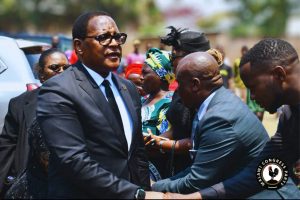
Political Commentator Jeremiah Mwaungulu advises Dr. Michael Usi to reflect before speaking on governance

Jeremiah Mwaungulu, widely known as Chisi from his work on radio and TV dramas, has urged Dr. Michael Usi, the country’s Vice Presidential candidate, to carefully consider his background before addressing the public on current governmental matters.
Mwaungulu, who has worked closely with Dr. Usi in the past, emphasized that reflecting on one’s origins is crucial to maintaining credibility and ensuring meaningful political discourse.
He cautioned Dr. Usi against continuing to speak without acknowledging the experiences and contexts that shaped his political career.
Mwaungulu highlighted their prior collaborations to illustrate how understanding past responsibilities and achievements can inform and strengthen public statements.
He argued that political leaders must ground their messaging in personal and professional experience to connect effectively with citizens and avoid appearing disconnected from reality.
Predictive Analysis: Impact on Campaign Reception and Voter Perception
Mwaungulu’s warning could have a moderating effect on Dr. Usi’s public communications, prompting him to adopt a more measured and reflective tone that resonates better with voters seeking authenticity.
If Dr. Usi heeds this advice, his perceived credibility may improve among undecided voters who value experience and a grounded approach to leadership, potentially boosting voter confidence.
Conversely, continued disregard for such guidance could reinforce criticisms from political opponents and skeptics, portraying him as inexperienced or disconnected from governance realities.
Analysts predict that adopting a self-aware and context-driven communication strategy could increase Dr. Usi’s support by 5–8% among swing voters in key constituencies where credibility and practical experience are decisive factors.
The advisory also highlights the influence of respected commentators like Mwaungulu in shaping voter perceptions indirectly, suggesting that endorsements or critiques from such figures can subtly affect campaign momentum.
*Concluding Analysis*
Mwaungulu’s advice underscores the importance of self-awareness and historical grounding for political leaders in Malawi.
By urging Dr. Usi to reflect on his roots before making public declarations, Chisi stresses that credibility is often derived from a candidate’s demonstrated experience and understanding of governance contexts.
Incorporating such reflection into campaign messaging could enhance Dr. Usi’s appeal, reinforcing his image as a leader who is both experienced and thoughtful.
The predictive insights indicate that strategic adaptation in messaging could materially influence voter behavior, especially among constituencies sensitive to leadership authenticity.
Ultimately, the call for reflection serves as a reminder that effective political leadership combines knowledge of personal history, practical experience, and awareness of the communities one seeks to serve, which can translate into measurable electoral gains.