MPS Targets 27,000 Officers in Five-Year Policing Overhaul
The Malawi Police Service (MPS) has unveiled a five-year strategic plan aimed at transforming policing through digital technology, increased manpower and improved security infrastructure.
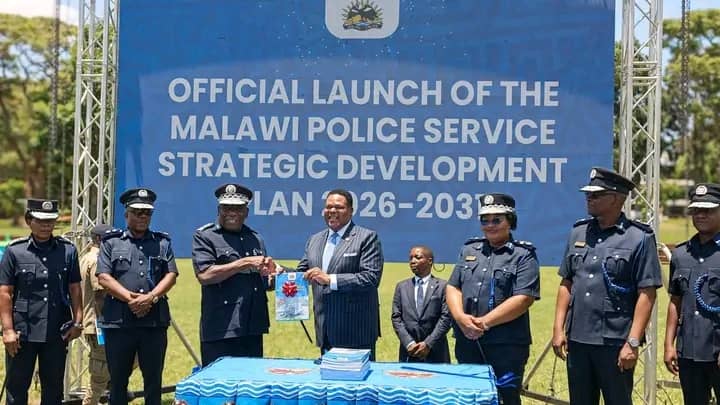
The 2026–2031 Strategic Development Plan, launched at Police Headquarters in Area 30, Lilongwe, is designed to strengthen public safety, improve service delivery and equip the police to respond effectively to emerging security challenges.
The plan, launched under the theme, “Modernising Policing Services: Embrace Digital Transformation,” identifies several key reforms, including the introduction of point-of-sale (POS) machines within the Road Traffic Directorate to enable motorists to pay for traffic offences on the spot.
Presenting the plan to the Minister of Homeland Security, Superintendent Reuben Kantwanje Alexander said the digital payment system would promote transparency, curb misconduct among traffic officers and restore public confidence in the police.
“When the public has trust in the way we deliver our services, development will follow,” Alexander said.
On human resource development, MPS plans to increase its workforce from approximately 19,000 officers to more than 27,000 through the recruitment of an additional 8,000 personnel.
The service also intends to construct 300 police units nationwide and procure five helicopters, five boats, 50 urban patrol vehicles and 60 traffic vehicles and motorcycles to strengthen its operational capacity.
In another major investment, the plan provides for the installation of 1,000 closed-circuit television (CCTV) cameras to improve surveillance, prevent crime and enhance security monitoring in public spaces.
Minister of Homeland Security Peter Mukhito welcomed the proposed reforms, describing the strategic framework as an important tool for measuring institutional performance and monitoring progress towards the police service’s objectives.

He reaffirmed the government’s commitment to supporting MPS in implementing the planned reforms.
Inspector General of Police Richard Luhanga described the launch as a significant milestone in the transformation of policing services, expressing confidence that the plan would strengthen the institution’s capacity to protect lives and property.
The strategic plan seeks to build a professional police service capable of providing effective security through stronger operational systems, modern equipment and improved management structures.
However, translating the ambitious targets into tangible improvements will depend on sustained funding, effective implementation, accountability and proper oversight.
With an additional 8,000 officers, expanded police infrastructure and investment in modern technology, the 2026–2031 plan sets out an ambitious roadmap for building a more responsive and technologically advanced police service.