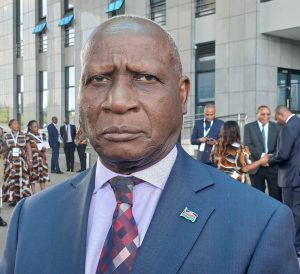
Chief Secretary Calls for Swift Implementation of National Intellectual Property Policy

Chief Secretary to the President and Cabinet, Justin Adack Saidi, has urged government ministries, departments and agencies (MDAs), as well as the private sector, to ensure effective implementation of the National Intellectual Property Policy (NIIPP) once it is finalised.
Saidi made the call on Tuesday when he presided over a High-Level Validation Workshop on the Draft National Intellectual Property Policy 2026–2030 in Lilongwe.
He stressed that the policy is crucial for Malawi as many people have been developing innovations and products without adequately protecting their intellectual property, resulting in the country losing out on the benefits of such innovations.
“When we have this kind of policy and people agree on the way forward, we should be able to benefit from intellectual property,” said Saidi.
He said Malawians should be able to benefit from their innovations, particularly at a time when the country is embracing digital transformation and witnessing increased innovation.
“We are in a digital era where so many things are happening. As a country, we need to have our own policy on how to manage intellectual property so that we can benefit from it,” he said.
Saidi further called for stronger coordination among government ministries, departments and agencies to ensure that intellectual property is properly supported and that innovators can benefit from their work.
He said once the policy is finalised, innovators will be introduced to its provisions and guided on how they can take advantage of the opportunities it provides.
“It will be outlined there, and it will be easier for them even to sell their products and innovations and be able to earn a living,” said Saidi.
Meanwhile, Chairman of the Companies, Registration and Intellectual Property Centre (CRIPC), Professor McPherson Mallewa, said the draft policy has been presented to various experts for validation.
Mallewa said the next step is to incorporate comments, additions and recommendations raised by experts and other stakeholders during the workshop before the policy is finalised and implemented.
He said this process would help ensure that the policy is comprehensive and can be implemented effectively without unnecessary challenges.
The validation workshop brought together experts from academia, the Judiciary, the private sector and government ministries, departments and agencies.