ACB calls for public involvement in fighting against Corruption
By Antony Isaiah Jr…….
The Anti-Corruption Bureau has called for the Public involvement in the fighting against Corruption saying it is not only the responsibility of the Bureau.
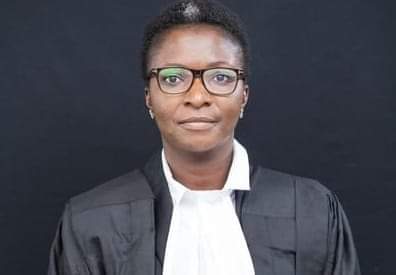
ACB Director General, Martha Chizuma was speaking in Lilongwe on Tuesday when the Corruption grafting body commemorated the African Anti-Corruption Day in Nsundwe.
Chizuma said everyone must take responsibility in campaigns against the vice for the betterment of the country.
“Fighting against Corruption is not for only Anti-Corruption Bureau,” she said.
“Everyone should take responsibility, parents, teachers, church leaders should have their hands in helping to eradicate this evil practice.
“That’s one of the reasons as to why we have opted for rural areas rather than towns. People might think that Corruption is only at Capital Hills. Corruption is on each and every stratus of the country or society. In local chiefs, issues of the Affordable Input Programme (AIP), at their local clinics, there are issues of corruption.”
Meanwhile, Chizuma has urged youths and people in rural areas to distance themselves from Corruption.
She was delighted with the turn-out at Nsundwe Police Ground as the crowd was dominated by youths.
“If we are going to change the narrative of this corruption, then it will be these young people. The reason is that they are the most [group of people] affected by Corruption.
“When we are talking about corruption, it happens in schools, clinics and they are the ones who enjoy or suffer the absence [of these social services.] This has been a major factor in me thinking what structures we should have in as far as corruption fighting is concerned.
“Malawi is a relatively young country and most of them are actually within the age of 18-30. So they are these groups who can determine especially how corruption fighting should be pursued.”
Chizuma said the Bureau decided to commemorate the day in Nsundwe which is a rural area rather in town because people living in these peripherals are the ones who suffer most from Corruption as they don’t have plan B unlike people in Towns.
“Unlike us who live in towns, these people in rural areas have no plan B, so when the effects of Corruption erupt, they are the most affected people,” she added.
On 11 July every year, concerned Africans pause to reflect on anti-corruption progress in their communities, what is working, what is not, and what remains to be tried.
July 11 marks the day the African Union (AU) adopted the African Union Convention on Preventing and Combatting Corruption (AUCPCC) in Maputo, Mozambique on 11 July 2003. The Convention came into force in 2006. As of August 2021, the Convention has been ratified by 44 Member States of the African Union.
Africa loses more than US$50 billion (about MK50 Trillion ) annually through illicit financial outflows, according to the High Level Panel on Illicit Financial Flows from Africa. Going back several centuries, Africa has been continuously losing valuable assets through illicit outflows of not only her natural resources, but also treasured artefacts of African societies, and various proceeds of crime. These outflows directly impact the quality of life in Africa.
They curtail Africa’s efforts to lift all her people out of poverty, feed and educate her children, and provide other basic services to her citizens. They prevent Africa from keeping steady on a sustainable path to achieve the African Agenda 2063 and the global Sustainable Development Goals.
The African Anti-Corruption Day provides an opportunity to reflect on the role of corruption in all this. For African resources to illicitly wind up in foreign banks, many people will have played a role.
Equally, schemes to extract Africa’s mineral resources while leaving little value to the host country typically involve a network of people and companies, both in and outside Africa. This also means that existing anti-corruption safeguards failed to prevent the outflows.
The Anti-Corruption Day also helps Africa’s anti-corruption fighters share good lessons and practices. Asset recovery efforts are paying off in some member states. For example, the Angolan Attorney General in 2019 reported that their office has recovered more than US$5bn in assets in one year. Several other countries report progress in their asset recovery efforts, including Nigeria where in 2018 the government recovered US$322m from the Swiss government that had been stolen by a former military ruler.
Similarly in 2019, Sierra Leone’s Anti-Corruption Commission presented a cheque for 7.5 billion Leones to President Dr Julius Maada Bio as part of 16 Billion Leones of stolen cash recovered from corrupt officials.
The African Union has also recently carefully negotiated and agreed on a Common African Position on Assets Recovery. This framework provides guidelines for African countries to follow in handling recovered assets, and to speak with a common voice with international partners regarding a transparent timetable for the recovery and return of illicitly acquired African assets.
For the Africans, the African Anti-Corruption Day provides that necessary pause to assess any gains made so far, the viability of existing tools, the potential of new ideas, the success of colleagues, and partnerships that need strengthening.