MHRRC Advocates for Iron Sheets to Replace Tiles in Ntchisi Schools
The Malawi Human Rights Resource Centre (MHRRC) says it is pushing for increased resource allocation from government and civil society to ensure that school blocks in Ntchisi District are roofed with iron sheets instead of tiles. The organisation argues that tiles pose a safety risk, as they can break and fall on learners during lessons.
The call follows a media advocacy tour organised by MHRRC, which took journalists to various schools in the district to assess infrastructure and resource allocation. The tour aimed to gather evidence to support advocacy efforts, particularly in areas where councils may not have allocated adequate resources.
During the tour, journalists accompanied by the District Social Accountability Committee (DSAC) visited Mthawira LEA School in Malomo. At the school, some learners were found attending classes outside, using an Anglican church due to inadequate classroom space. However, the school has benefited from the Malawi Education Reform Programme (MERP), which has funded the construction of two classroom blocks.
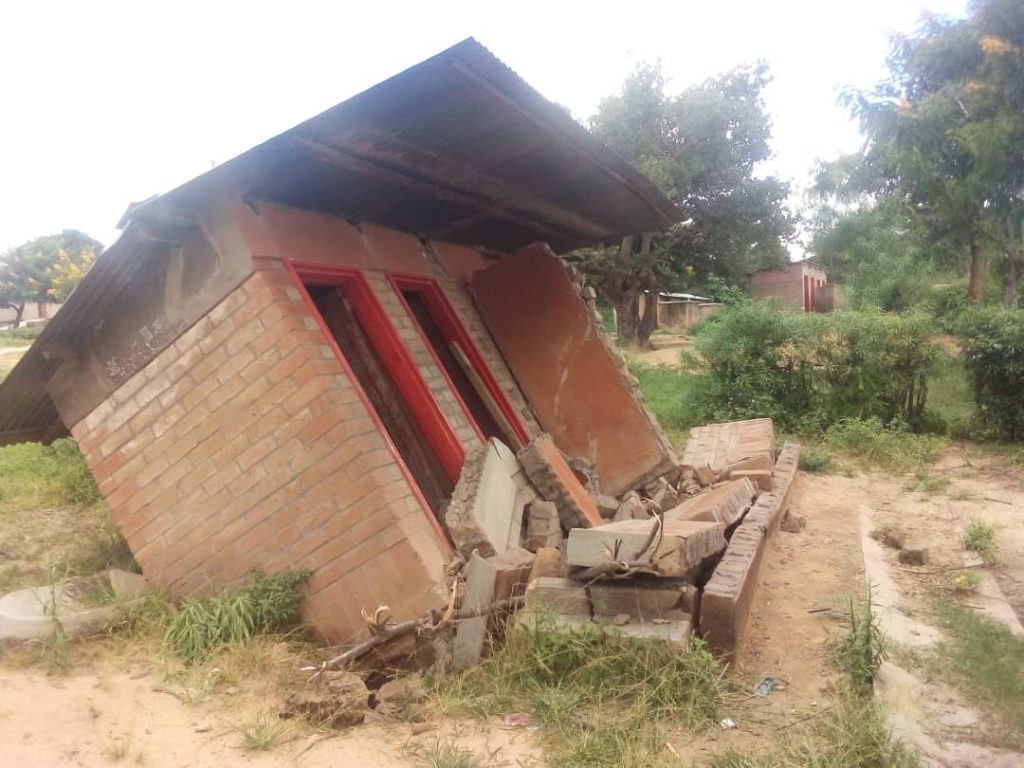
Head teacher MacLoud Mchizampheta said community participation has played a key role in addressing some of the school’s challenges. He cited the reconstruction of a collapsed toilet, which the community has pledged to rebuild. He added that strong cooperation between teachers and the community has enabled the school to purchase a printing machine worth K1.3 million, improving learners’ academic performance.
At Mbomba LEA School, a Standard 8 learner, Innocent Kalengenya, highlighted high absenteeism and dropout rates. He attributed this partly to safety concerns, recalling an incident where a falling tile injured a learner. The incident reportedly forced some students to transfer to Dete LEA School, where classrooms are roofed with iron sheets.
The tour also took journalists to Mtambalala LEA School, where another Standard 8 learner, Yesinta Chisakasa, said two classroom blocks and an office are still roofed with tiles, posing risks to both learners and teachers. She further revealed that the school lacks access to safe water, forcing learners to draw water from a nearby river.
Chisakasa explained that students are encouraged to bring drinking water from home, but those who fail to do so resort to unsafe sources. A borehole that was drilled at the school is reportedly non-functional, leaving learners, teachers, and the surrounding community with no reliable water supply.
MHRRC Capacity Building and Development Associate, Noel Msiska, has since called on government and local authorities to prioritise roofing school infrastructure with iron sheets, noting that many tiled roofs have exceeded their lifespan. He also observed that several classroom blocks in the district are old and dilapidated, making them unsuitable for effective learning.
Msiska commended the media for participating in the tour, saying the findings will provide critical evidence for advocacy aimed at improving service delivery. He stressed that investing in durable and safe school infrastructure is essential if the country is to achieve its long-term development goals under Malawi 2063.
The media advocacy tour was organised by MHRRC with financial support from NCA-DCA through the DANIDA-funded joint country programme.